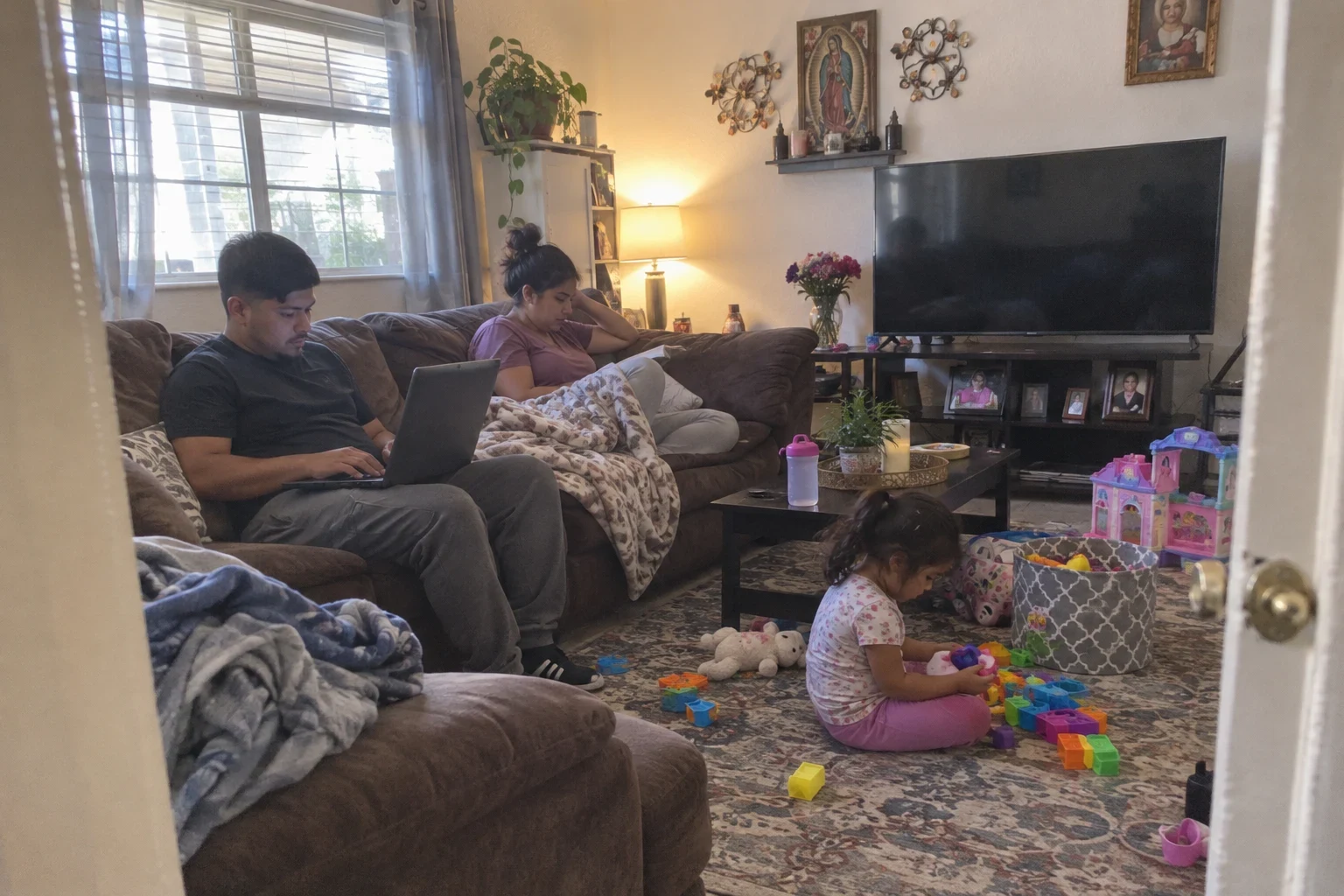
See Life Policy Options Part by Part in East Rancho Dominguez, CA
A life policy comes down to four pieces: how much it pays, how long it runs, who receives the money and, on some kinds, a cash value. Below we compare how term life and whole life assemble those pieces, then you answer a few short questions through our short form. People in East Rancho Dominguez, Compton and Paramount start the same way.
- No cost to use
- Every policy part explained
- Decide at your own pace
- Start from any device
Coverage options for East Rancho Dominguez families
Answer six short questions and a licensed agent will follow up with options that fit your situation.
- Takes about two minutes
- No obligation to buy
- Your details stay private
Free, no obligation
See your coverage options
Six short questions. About two minutes.
How Getting a Policy Usually Works
Applying follows the same broad steps with most insurers. Knowing them in advance means nothing in the paperwork catches you off guard.
- 1
Answer a few short questions
You share some basics through our short form: your date of birth, roughly how much cover you are thinking about and the person you would want to receive it. It takes about two minutes.
- 2
An agent reaches out
A licensed agent working in your part of California contacts you with choices that match what you shared. That is the moment to ask how each piece of a policy applies to you, and how term life and whole life compare for your situation.
- 3
Health questions, sometimes an exam
An application asks about your health and tobacco use, and some policies also need a medical exam. Some policies skip the exam; they usually cost more or cover less, because the insurer is accepting risk with less information.
- 4
The insurer decides
The insurance company reviews the application and decides whether to offer cover, and on what terms. Neither we nor the agent can approve a policy on its behalf.
Four Kinds of Life Policy
Term life covers you for a chosen number of years, commonly 10, 20 or 30, and ends when that period runs out. Whole life stays in force for your whole life and builds cash value, a feature of the policy an agent can walk you through. Universal life is also lifelong but lets the premium and the amount be adjusted, while final expense is a small whole life policy sized for funeral costs. Our Term Life Insurance and Whole Life Insurance pages examine those two kinds in depth.
Term Life Insurance
Coverage for a set number of years: how term lengths compare, what ends when the term ends, and what an agent asks before suggesting a length.
Whole Life Insurance
How whole life insurance works, part by part: the face amount, the premium, the cash value and the beneficiary, and what shapes its price.
What Life Insurance East Rancho Dominguez Is
Life Insurance East Rancho Dominguez costs you nothing to use. Its one job is to put you in touch with a licensed life insurance agent in California. We do not issue policies and we do not act as an agent, so we are neither an insurance company nor an agent.
What we add is explanation: how a policy is put together, which facts push its price up or down and what an application usually asks of you. We do not sell, price or recommend any policy. Once your answers are sent, an agent carries the conversation forward, and our About page describes how your details are handled.
What Moves the Price of a Life Policy
The premium on a life policy rests on a few details about the person insured and the amount and kind of cover requested. The insurance company works out the figure, not us. Every factor below shifts either the size of the risk the insurer takes on or the number of years it holds that risk. A few are within your control, and a few are not.
We show no prices because no figure exists until an insurer has your answers to its health questions. Two people asking for the same amount can be offered very different premiums.
- Age
- Premiums are figured on your age when the policy starts. The older the insured person, the closer the policy sits to the years when insurers expect to pay, so the price is higher. Starting earlier fixes the age used for the calculation.
- Health
- Health questions, and sometimes a medical exam, tell the insurer how much risk it is accepting. Conditions it reads as higher risk can raise the price or change which policies are offered.
- Tobacco use
- Insurers ask about tobacco on a separate line because it is closely tied to long-term health. People who use tobacco are usually placed in their own, higher-priced group.
- The amount of cover
- A larger amount means a larger potential payout, so the premium rises with it. People often weigh a smaller amount they can keep paying against a larger one that strains the budget, since a policy only helps while it stays in force.
- Length of the term
- On term life, a longer term reaches further into the later years, when the chance of a claim is higher. That extra stretch is why a 30-year term costs more per payment than a 20-year term for the same amount.
- Kind of policy
- Term life covers a set window and usually costs less for a given amount. Whole life lasts for life and builds cash value, so the same amount costs considerably more each year.
Towns We Cover
Life Insurance East Rancho Dominguez works with people in East Rancho Dominguez and in Compton, Paramount, Lynwood, South Gate, Carson, Downey, Bellflower, Lakewood, Florence-Graham and Huntington Park. A licensed agent who covers your town is the one who follows up.
- East Rancho Dominguez
- Compton
- Paramount
- Downey
- Carson
- South Gate
- Lakewood
- Bellflower
- Lynwood
- Florence-Graham
- Huntington Park
The questions are identical in every one of these towns, and so are the steps that come after them. Our Service Areas page has the full list.
Common Questions About Life Insurance
Something not covered here? Ask us
How much life insurance do people usually look at?
One rule of thumb people use adds together several years of earnings and the debts they would want cleared. Treat it as a rule of thumb, not advice for your own situation. As an example only, take the town's median household income of $67,645 and a mortgage on a home near the median home value of $548,400: several years of that income, plus whatever is still owed on the mortgage, gives a rough starting figure to test. Your own income, debts and plans will move that number up or down.
Why do people buy life insurance?
Most reasons come down to money someone else would need. People commonly buy cover to replace income, pay off a mortgage, meet children's costs, pay for a funeral or leave money to family. The reason matters because it hints at how long the cover needs to last.
How do people decide between term life and whole life?
Many people match the length of the policy to the length of the need. A need with an end date, such as a mortgage or the years until children are grown, points many toward term life. A need that lasts for life, such as funeral costs or leaving money to family, leads others to whole life. We describe these patterns; the choice is yours.
Can I change my mind after buying a policy?
Yes, within limits. Every policy carries a free-look period of at least 10 days. During that window you can cancel and get your premium back. The policy documents state the exact number of days, so look for it when they arrive.
Is a life insurance payout taxed?
A payout to a named person is generally not taxed as income under federal law. Other taxes and individual situations can differ. Ask a tax adviser about your own case.
Do I have to buy anything after sending my answers?
No. There is no obligation to buy. You can look over the options you receive, ask questions about any part of them and decide not to go ahead.
How We Explain a Policy Before You Choose One
A life policy is a contract with a handful of moving parts. We describe each part, what it does and what it gives up, so the choices you see later read as decisions rather than labels.
- 01
Parts before policy names
We start with the pieces every policy shares: the amount paid out, how long the cover lasts, who receives it and whether it builds cash value. Once you can name those, a policy label turns into a set of choices you can check one at a time.
- 02
The cause behind each trade-off
Longer cover carries the insurer's risk into older ages, and cash value sends part of each premium into a feature that stays with the policy. The premium itself depends on your age, health, the amount and the kind of policy, and the insurance company sets it. We explain the reasoning so the figure you are shown makes sense.
- 03
One set of answers
You answer a few short questions once. The conversation that comes after picks up from what you already said, so nobody asks you to start again from zero.
- 04
You make the call
We set out the trade-offs people usually consider, then step back. Nothing here runs on a timer, and you can return to any section as often as you like before you send a single answer.
Start With the Parts That Matter to You
Once you know which parts of a policy matter most to you, the next step takes about two minutes through our short form.